
Millet & Moong Dal Pongal
Introduction
Millet and Moong Dal Pongal is a warm, savory one-pot dish inspired by Ven Pongal, one of South India’s most comforting grain-and-lentil preparations. Traditional Ven Pongal is generally made by cooking rice and yellow moong dal until very soft, then seasoning it with cumin, black pepper, ginger, curry leaves and ghee. In this Mellow Masala version, millet replaces rice, giving the dish a slightly nuttier flavor and a more rustic texture while preserving the creamy, spoonable character that defines a good Pongal.
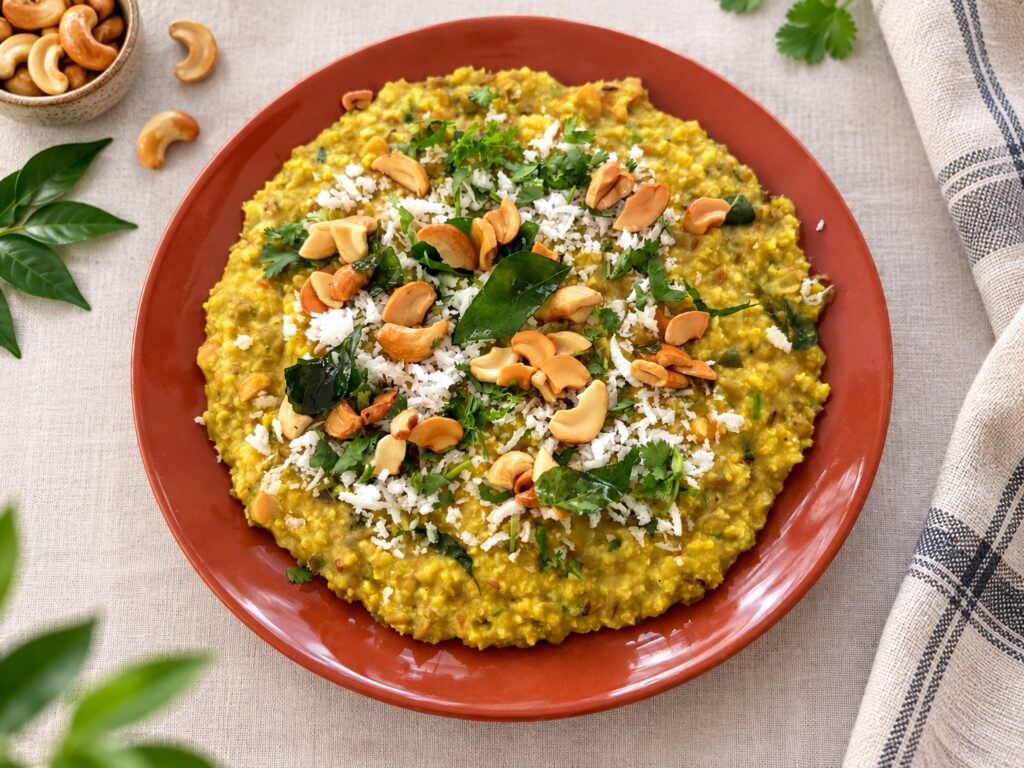
The millet and yellow moong dal are cooked together until tender and cohesive, then combined with a fragrant tempering of cumin, crushed black pepper, ginger, green chile, hing and curry leaves. Onion and turmeric add another layer of flavor and color, while a touch of lime keeps the finished dish fresh. Roasted cashews, grated coconut and cilantro provide richness, crunch and brightness.
Roots in South Indian Cuisine
Pongal is particularly associated with Tamil Nadu, where it is both everyday comfort food and part of a much larger cultural tradition. The word pongal is connected with the idea of boiling over, a symbol of abundance and prosperity.
It also gives its name to the Pongal harvest festival, one of Tamil culture's most important seasonal celebrations. Traditionally, newly harvested rice is cooked until it rises and overflows from the pot, expressing gratitude for the harvest and hopes for prosperity in the year ahead.
Although festive sweet Sakkarai Pongal has a special ceremonial role, savory Pongal is part of ordinary South Indian food culture as well. It is commonly eaten for breakfast and is frequently served with coconut chutney and sambar in homes and restaurants.
For readers unfamiliar with Indian cuisine, Pongal can loosely be described as a savory grain-and-lentil porridge, although that description does not fully capture its distinctive flavor. What makes Pongal unmistakably South Indian is the combination of black pepper, cumin, ginger, curry leaves and ghee.
Why Pongal Is Popular—and What Makes This Version Interesting
Pongal has remained popular because it is simple, satisfying and adaptable. It does not require a long list of spices or an elaborate sauce. Much of its flavor comes from a handful of ingredients that are allowed to remain clearly recognizable.
A good Pongal has several contrasting qualities: the millet and dal are soft and creamy, black pepper provides warmth, ginger and green chile add freshness, cumin gives an earthy aroma, curry leaves contribute their distinctive fragrance, and ghee rounds everything out.
This Mellow Masala version is interesting because it changes the traditional grain while respecting the basic structure of the dish. Millet brings a nutty, rustic character; yellow moong dal gives creaminess; turmeric adds a warm golden hue; lime brings gentle acidity; and the coconut-cashew topping adds both texture and visual contrast.
Popular Pongal Variations
Ven Pongal: The classic savory version made primarily with rice, yellow moong dal, cumin, pepper, ginger, curry leaves, ghee and cashews.
Sakkarai Pongal: A festive sweet Pongal made with rice and dal, traditionally sweetened with jaggery and enriched with ghee and nuts.
Khara Pongal: A savory preparation particularly familiar in Karnataka and South Indian restaurants, often eaten with chutney and sambar.
Millet Pongal: Rice is replaced with varieties such as little millet, foxtail millet, barnyard millet or kodo millet.
Vegetable Pongal: Carrots, beans, peas, spinach or other vegetables are incorporated to make a more substantial meal.
Pepper Pongal: A pepper-forward version in which freshly crushed black pepper becomes the dominant seasoning.
Nutritional Benefits
Millet Pongal combines a whole grain with a pulse, making it a satisfying plant-based meal with a good balance of carbohydrates, protein and fiber.
Millet
Millets contain complex carbohydrates, fiber and a range of micronutrients. Their exact nutritional profile varies depending on the variety used.
Yellow Moong Dal
Yellow moong dal contributes plant protein and dietary fiber while helping create Pongal's characteristic creamy texture. Because split moong is mild in flavor, it works especially well with pepper, cumin and ginger.
Ginger and Spices
Ginger, cumin, pepper and curry leaves provide considerable flavor without requiring a heavy sauce or large amount of added ingredients.
Cashews
Cashews add richness, texture, plant protein and unsaturated fats.
Naturally Vegetarian
The recipe is vegetarian as written and can easily be made vegan by replacing ghee with a suitable cooking oil.
Gluten-Free by Nature
Millet, yellow moong dal and the primary ingredients are naturally gluten-free. If strict gluten avoidance is required, check packaged hing/asafoetida, because some commercial varieties are blended with wheat flour.
Millet Pongal with Yellow Moong Dal is a wholesome South Indian-inspired one-pot meal made by cooking millet and moong until creamy, then seasoning it with cumin, black pepper, ginger, curry leaves and ghee. Finished with lime, fresh coconut, cilantro and golden roasted cashews, it is equally suited to breakfast, lunch or a light dinner.
- 0.5 cup millet (little millet or foxtail millet, rinsed well)
- 0.5 cup yellow moong dal (split and skinned mung beans, rinsed well)
- 5 cups water (for pressure cooking)
- 1 tsp turmeric powder
- 0.75 salt (adjust to taste)
- 1 tbsp neutral oil (avocado, sunflower or vegetable oil)
- 1.5 tbsp ghee
- 1 tsp cumin seeds
- 0.75 tsp black pepper (coarsely crushed)
- 0.25 tsp hing or asafoetida (optional)
- 1 tsp fresh ginger (finely chopped or grated)
- 1 –2 green Chillies (slit or finely chopped)
- 10 –12 curry leaves (fresh)
- 1 medium onion (finely chopped)
- 1 –2 tsp fresh lime juice
- 2 tbsp fresh cilantro (finely chopped)
- 0.25 cup cashews (halved or roughly broken)
- 1 tsp ghee (for roasting cashews)
- 0.5 cup fresh grated coconut (unsweetened)
- 1 –2 tbsp fresh cilantro (chopped)
- 1 Rinse the millet and yellow moong dal together 3–4 times until the water runs mostly clear. Drain and keep aside. If you prefer an especially soft Pongal, soak them for 5-6 hours before cooking.Make the Tempering Directly in the Pressure Cooker
- 2
Heat the oil and ghee directly in the pressure cooker over medium heat. Add cumin seeds and let them sizzle, then add coarsely crushed black pepper, hing, finely chopped ginger, turmeric powder, green chillies and curry leaves. Sauté for about 30 seconds until fragrant. Add the finely chopped onion and cook for 3–4 minutes until soft and lightly golden.Add Millet and Yellow Moong Dal- 3
Add the rinsed millet and yellow moong dal directly into the same pressure cooker. Stir for 1–2 minutes so the grains and dal are coated with the aromatic tempering. Add turmeric powder, and salt and mix well.Add Water and Pressure Cook- 4
Pour in water and stir well, making sure nothing is sticking to the bottom. Close the pressure cooker and cook over medium heat for about 3 whistles. Turn off the heat and allow the pressure to release naturally before opening.Adjust the Pongal Consistency- 5
Open the cooker and stir the cooked millet and dal well. Pongal should be soft, creamy and slightly loose rather than dry and grainy. Add 0.5–1 cup hot water, a little at a time, until you reach the desired consistency. Simmer uncovered for another 2–3 minutes if needed. Add fresh lime juice after turning off the heat.Prepare the Garnish- 6
In a small pan, heat ghee and fry the cashews until golden. Add a few fresh curry leaves and fry briefly until crisp and aromatic. Remove from the heat immediately.Garnish and Serve- 7
Transfer the hot Millet Pongal to a serving bowl or plate. Finish generously with ghee-roasted cashews, fried curry leaves, freshly grated coconut and chopped cilantro. Serve immediately while the Pongal is warm and creamy.Mellow Masala Tip- 8
Pongal continues to thicken as it sits, especially when made with millet. Keep some hot water nearby and loosen it just before serving if necessary. Make sure to adjust salt level as needed. The ideal texture should be soft, spoonable and creamy—not dry like cooked rice or millet pilaf.Millet Pongal, Yellow Moong Dal Pongal, Healthy Pongal Recipe, South Indian Millet Recipe, Millet Ven Pongal, Pongal Without Rice, Millet Moong Dal Recipe, South Indian Breakfast Recipe Vinay Mummigatti
I love traveling, cooking, and reading. This blog is a reflection of my passion for cooking. Food is a representation of culture and I have tried to assimilate foods from different cultures across the world. I am an Indian by birth who moved to the USA 20 years back. I hope my recipes and articles bring new experiences and joy to the readers. Please share your comments and feedback.
- 2